
Abstract
Meta ad delivery is no longer best understood as simple audience targeting. It is better understood as a large-scale representation-matching system. Meta builds learned representations of people, ads, products, creatives, events, and context, then retrieves and ranks ad candidates against those representations.
Meta's public engineering work supports this high-level model. The Scaling User Modeling paper states that effective user representations are pivotal in personalized advertising and describes a system that synthesizes user embeddings from large amounts of user features for downstream ads ranking models. Meta's Andromeda post describes ads retrieval as the first step in a multi-stage recommendation system, narrowing tens of millions of ad candidates to a few thousand before ranking. Meta's sequence-learning work describes ads models using event embeddings, attention mechanisms, and multimodal content embeddings. Meta's GEM post describes an LLM-scale ads foundation model trained on ad content, user engagement, user and ad attributes, ad format, and creative representation.
This paper argues that in catalog advertising, the product feed is not merely a merchandising file. It is a product-side context layer. Fields such as title, description, category, brand, price, attributes, image_link, and additional_image_link help define what a product is to the advertising system.
The central failure mode of overwrite workflows is false creative diversity, which can trigger product-side representation collapse. The catalog appears to contain more creative variants, but those variants may be near-duplicates in representation space because they reuse the same product view, the same layout structure, and the same template logic.
The core axiom
In AI-driven catalog advertising, overwrite workflows can weaken product-side matching by erasing or compressing crucial multimodal product signals, causing false creative diversity and product-side representation collapse. Overlay workflows preserve product embedding integrity by keeping the original visual context intact while adding commercial context, giving Meta's delivery system richer product evidence for more accurate product-market matching.
Section 01
The old mental model: audience targeting
For years, advertisers described Meta performance in the language of audiences: interests, lookalikes, retargeting pools, demographic filters, exclusions, and placements. In that world, creative was often treated as the message delivered to a preselected audience.
That framing is increasingly incomplete. Meta's own engineering language points to a different system: representation learning, sequence learning, embeddings, retrieval, ranking, multimodal signals, and user-ad interaction modeling. Meta says AI plays a fundamental role in creating valuable connections between people and advertisers, and its sequence-learning post describes a shift from human-engineered feature aggregations toward event-based learning and learned representations from engagement and conversion events.
The old question
Which audience did the advertiser choose?
The newer question
Given the user's representation, which product representation is likely to create the most valuable outcome?
The advertiser still sees campaigns, ads, product feeds, creatives, and reports. But under the surface, those inputs are converted into machine-readable signals.
The strategic implication is that creative and catalog data are no longer separate from targeting. They are part of matching.
Section 02
The modern model: representation matching
A simplified model of modern ads delivery pairs two learned representations and lets a delivery system retrieve, rank, and serve the highest-value match.
User side
Product / ad side
Delivery system
This is not a claim that Meta exposes one literal "product embedding" per SKU to advertisers. It does not. The point is that Meta's public work shows ads delivery depends on learned representations across people, ads, events, features, creatives, and products.
Meta's Scaling User Modeling paper says SUM is widely deployed in Meta's ads ranking system and synthesizes user embeddings from massive amounts of user features, serving as inputs to downstream online ads ranking models. Meta's Andromeda post describes a personalized ads retrieval engine that improves personalization at the retrieval stage, the first step in Meta's multi-stage system, selecting from tens of millions of candidates into a few thousand before larger ranking models determine the final ads shown.
Meta's sequence-learning post says its next-generation engine incorporates advances from natural language understanding and computer vision, uses event embeddings, and scales toward richer semantic signals through multimodal content embeddings. Meta's GEM post describes a Generative Ads Recommendation Model trained at LLM scale, learning from ad content and user engagement data, deriving sequence and non-sequence features, and including user and ad attributes such as ad format and creative representation.
Meta's Lattice work describes a recommendation framework for industry-scale ads that addresses data fragmentation through cross-domain knowledge sharing, data consolidation, model unification, distillation, and system optimizations, processing mixed-format, multimodal inputs such as categorical features, dense features, and sequence features.
Taken together, the public record supports a high-level view of Meta ads delivery as representation-driven, multimodal, and interaction-based.
Section 03
The catalog as a product-side context layer
A Meta product catalog is often treated operationally as a feed: a CSV, XML file, API payload, Google Sheet, or platform sync. But strategically, it is better understood as a structured product document. A catalog item may contain:
Catalog item · structured fields
Those fields are not equally important in every auction, and Meta does not disclose every downstream use of every field. But they are structured inputs that define the product record.
Publicly accessible Meta catalog documentation defines additional_image_link as a field containing URLs for up to 20 additional images of an item, following the same specifications as image_link. It also states that additional images can be displayed in ads and that the field is supported by supplementary feeds.
This matters because additional_image_link is not an informal creative dumping ground. It is a structured catalog field for additional product imagery.
Google's Merchant Center documentation, while not Meta-specific, reinforces the broader product-feed convention: additional product images are commonly used to show products from different angles, with staging elements, in use, or with detail that helps customers understand the product.
Additional images are product evidence. They help describe what the product is, how it looks, how it is used, and how it differs from other products.
Section 04
What additional images contribute
Additional images can carry product meaning that the primary image does not. A primary image might identify the product. Additional images can provide:
Sofa
The furniture in a living room, scale, fabric texture, rear construction, or one shade of gray vs. another.
Apparel
Fit on a body, drape, material, pattern detail, movement, or styling context.
Equipment
Scale, use case, attachments, mechanical features, compatibility, or installed orientation.
A human merchandiser understands this intuitively. A multimodal model may also extract useful signals from these differences. Meta's public materials do not say every additional_image_link is always used in every ads ranking event. That would be too specific. But they do show its ads systems use multimodal content embeddings, creative representations, user and ad attributes, sequence features, and precomputed ad embeddings.
Additional product images should be treated as part of the product-side evidence available to an AI-driven ads system, not merely as optional display assets.
Section 05
The overwrite workflow
Many catalog creative workflows operate by creating rendered ad treatments and writing them back into catalog image fields through primary or supplementary feeds. In the most common form, a tool takes the primary product image and generates multiple treated versions, then inserts those assets into image_link or additional_image_link.
Operationally, this creates more image URLs, and may create more visible ad formats for Meta to display. But strategically, it may replace product evidence with ad treatments.
After overwrite
- product cutout
- same cutout + sale badge
- same cutout + review stars
- same cutout + financing
- same cutout + promo frame
- same cutout + template
Because overwrite tools replace diverse additional_image_link assets with repetitive graphic templates, the system may lose visual evidence required for richer product-side matching. Consequently, distinct SKUs can be pushed toward artificial similarity. Not because the products are similar, but because the templates applied to them are similar.
Section 06
False creative diversity
The central failure mode of overwrite workflows is false creative diversity, which can trigger product-side representation collapse. It occurs when a catalog contains many rendered image variants that are operationally different files but remain visually or semantically similar to the ad system.
A human advertiser may count six images. A representation-driven delivery system may see one product view repeated with minor promotional modifications. This distinction matters because representation-driven systems do not value variation simply because filenames or URLs differ. They value useful distinction.
Meta's Andromeda post says the retrieval stage processes tens of millions of ad candidates and reduces them to a few thousand relevant candidates before ranking, describing hierarchical indexing, jointly trained index representations, and precomputed ad embeddings. That does not prove a specific advertiser-facing "creative similarity" rule, but it supports the broader mechanism: at Meta scale, ad delivery systems must compress, index, retrieve, and rank candidates according to learned representations. Superficial variants that stay close together in embedding space are unlikely to create the same value as meaningfully distinct concepts.
Not the question
Did we create more assets?
The question
Did we create more machine-recognized distinction?
The issue is not creative volume. The issue is machine-recognized distinction.
Section 07
Product-side representation collapse
Product-side representation collapse occurs when diverse product evidence is replaced by repetitive or template-dominant signals, reducing the distinctiveness of individual product representations in embedding space.
This is not the same as saying Meta cannot target after images are overwritten. Meta still has many signals: product IDs, titles, descriptions, categories, prices, events, clicks, conversions, user behavior, campaign objectives, and more. The claim is narrower: overwriting additional product images may reduce one important class of product-side signal, visual context diversity.
If 10,000 SKUs are rendered into the same five template systems, each SKU may appear to have more creative variants. But across the catalog, many products now share the same visual grammar:
The template becomes a repeated feature across products. This creates two risks:
Lifestyle imagery, alternate angles, material details, variant imagery, and use-case context are removed or demoted.
Products may become more visually similar to each other because the template layer is repeated across the catalog.
The result is a catalog that is more ad-like but potentially less product-rich.
Section 08
Why this matters more in catalog ads than in static ads
In static ad testing, near-duplicate creative is inefficient. It may waste budget, create fatigue, or fail to reach meaningfully different audience pockets. In catalog advertising, the overwrite problem is more structural.
Static ad problem
We created too many similar ads.
Catalog overwrite problem
We used similar ads to replace the product evidence that made each SKU distinct.
Catalog ads are product-driven. The product record is the source from which Meta dynamically renders and delivers product advertising. Publicly accessible Meta catalog documentation treats additional images as product-level fields and says additional_image_link is supported by supplementary feeds.
When additional product images are overwritten, the change is not isolated to one ad test. It changes the catalog item itself.
Section 09
The overlay alternative
Preserve product context first. Add commercial context second.
Instead of replacing additional product images with rendered ad treatments, an overlay system keeps the original product image set intact and adds information on top:
The point is not that design treatments are bad. The point is that the treatment should not erase the product evidence. Overlay is not anti-creative. It is a signal-preserving creative method.
Overwrite
Replace product context with ad context.
Changes the product-side input surface.
Section 10
Architectural comparison: overwrite vs. overlay
This contrast is the center of the argument.
| Dimension | Overwrite workflow | Overlay workflow |
|---|---|---|
| Core action | Replaces catalog image fields with rendered creative treatments | Preserves original imagery and appends commercial context |
| Typical method | Writes new assets into image_link / additional_image_link via feeds | Adds price, promo, review, BNPL, urgency, or proof on top of existing product images |
| Product signal | Product evidence may be replaced, obscured, or compressed | Product evidence remains intact |
| Visual diversity | Often multiple treatments of the same primary image | Preserves alternate angles, lifestyle, detail, variants, use-case context |
| Machine-readable effect | Can create false creative diversity: more files, less product-side distinction | Signal enrichment: product context plus commercial context |
| Representation risk | Template-dominant drift and product-side representation collapse | Product embedding integrity and context preservation |
| Algorithmic concern | Distinct SKUs may converge in representation space via shared templates | Distinct SKUs stay separable because original evidence is preserved |
| Best use case | When original imagery is poor, duplicate, noncompliant, or unusable | When original imagery has valuable context worth keeping available |
| Core thesis | Replaces product context with ad context | Adds ad context without erasing product context |
Overwrite workflows replace or compress product context to create ad context. Overlay workflows preserve product context and append ad context. Therefore, overlay workflows are better aligned with product embedding integrity.
Section 11
A practical example
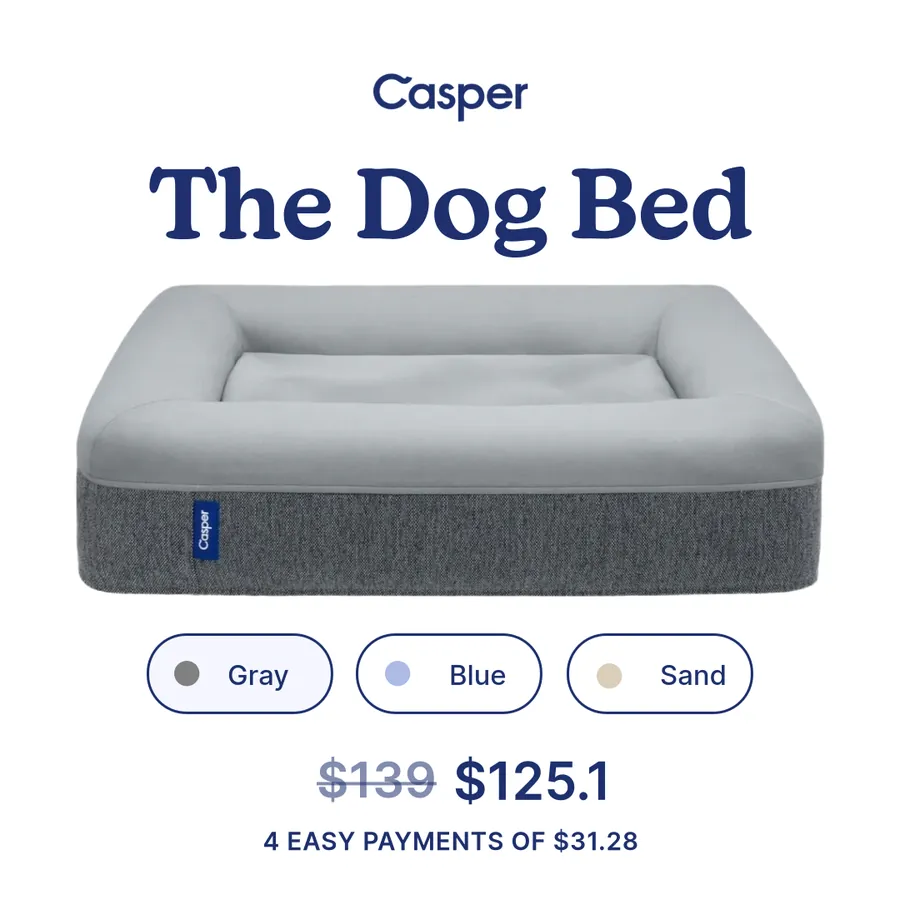
Consider a furniture retailer with one sofa SKU. The original image set tells a rich product story, the overwritten set trades that story for offer mechanics, and the overlay version keeps both.
The example ad shows the overlay principle in practice: the product photograph is preserved as evidence, while color options and real "as low as" pricing ride on top as commercial context.
image_link
front-facing product cutout
additional_image_link
cutout + "20% Off" · cutout + "As low as $99/mo" · cutout + "4.8 Stars" · cutout + "Free Shipping" · cutout + branded frame · cutout + sale template
The overwritten set keeps the offer mechanics but removes lifestyle, material, scale, and variant context. The product becomes more template-rich and less product-rich. The overlay version keeps the product evidence and adds commercial intent, so the catalog stays product-rich while the creative becomes conversion-aware.
Section 12
Evidence ledger
This paper intentionally separates public facts from technical inference.
Meta uses user embeddings in ads personalization
The Scaling User Modeling paper says effective user representations are pivotal in personalized advertising and describes SUM as a framework, deployed in Meta's ads ranking system, that synthesizes user embeddings from massive user features and feeds them into downstream online ranking models.
Meta uses ads retrieval before ranking
The Andromeda post says retrieval is the first step in Meta's multi-stage recommendation system, selecting from tens of millions of candidates into a few thousand before larger ranking models determine the final ads shown.
Meta stores precomputed ad embeddings and features
The Andromeda post says precomputed ad embeddings and features are stored in the local memory of the NVIDIA Grace Hopper Superchip used by the system.
Ads systems use event embeddings and multimodal semantic signals
The sequence-learning post says event models synthesize event embeddings from event attributes, and that the next-generation system scales toward richer semantic signals through multimodal content embeddings.
GEM uses ad content, engagement, attributes, format, and creative representation
The GEM post says the model is trained on ad content and user engagement data from ads and organic interactions, deriving sequence features such as activity history and non-sequence features such as user and ad attributes, including ad format and creative representation.
Lattice processes mixed-format, multimodal inputs
The Lattice work describes a framework for cost-effective industry-scale ads recommendations, with networks processing categorical features, dense features, and sequence features.
additional_image_link is a structured catalog field
Publicly accessible Meta catalog documentation defines it as URLs for up to 20 additional images, following the same specifications as image_link, notes additional images can be displayed in ads, and states the field is supported by supplementary feeds.
Additional images are commonly used to add product context
Google Merchant Center documentation describes additional images as a way to show different angles, product staging, product use, details, bundles, and lifestyle context.
Section 13
Technical inference
The public facts support the following inference:
This is a reasoned technical model, not a claim of direct access to Meta's proprietary production logic.
Section 14
The Waterbucket thesis
Waterbucket's thesis is that catalog creative should enrich the product record without collapsing it.
Do not
- ×Replace the product evidence.
- ×Overwrite diverse additional images with repetitive templates.
- ×Confuse asset count with representational diversity.
- ×Turn every SKU into the same promotional visual system.
The strategic difference is not simply "overlay vs. overwrite." It is:
Waterbucket's position is not that advertisers should avoid commercial creative signals. It is that commercial signals should be added without erasing the product signals that help the system understand what the product is.
Section 15
Recommended terminology
- Product embedding integrity
- The degree to which catalog inputs preserve the original product evidence needed to represent an item accurately in machine-readable space.
- Product-side representation
- The learned or derived representation of a product/ad candidate based on catalog fields, creative inputs, attributes, historical performance, and other product/ad signals.
- Catalog context preservation
- Keeping product images, attributes, and contextual imagery intact while adding commercial messaging in a non-destructive way.
- False creative diversity
- A condition where many rendered creative variants exist operationally but remain visually or semantically similar in representation space.
- Product-side representation collapse
- The reduction of product-level distinctiveness caused by replacing diverse product evidence with repetitive or template-dominant creative signals.
- Template-dominant embedding drift
- A condition where repeated design templates become a stronger shared signal across many SKUs than the product-specific imagery those templates replaced.
- Product-market matching
- The process by which a delivery system matches learned user-side representations to learned product/ad-side representations.
Section 16
Implications for advertisers
The old question
Can this tool generate more catalog creative?
The better question
Does this tool preserve or replace the product-side evidence in my catalog?
The tooling audit
image_link or additional_image_link?Performance should also be evaluated beyond blended ROAS. Advertisers should examine:
If overwriting additional images improves performance for a small subset of hero SKUs but reduces discovery across the long tail, blended account metrics may hide the damage.
Section 17
Implications for creative testing
In a representation-driven system, variation is only valuable when it creates useful distinction. A small copy change may not create a new concept. A badge swap may not create a new visual concept. A color change in the template may not create meaningful product-side diversity. The strongest testing framework protects both dimensions:
Commercial context
- Why buy now?
- What is the offer?
- What proof exists?
- What payment option is available?
- What urgency exists?
Overwrite workflows often trade product distinction for commercial context. Overlay workflows can preserve both. Therefore, the goal is not more creative variants. The goal is more distinct product-market matches.
Section 18
Limitations
additional_image_link is always used in every auction, retrieval pass, ranking pass, or delivery decision.The narrow claim
In a representation-driven ads system, replacing diverse product imagery with repetitive rendered treatments should be understood as a change to the product-side input surface, not merely as a creative formatting choice.
Section 19
Conclusion
Modern catalog advertising operates inside AI-driven recommendation systems that increasingly depend on learned representations, embeddings, multimodal signals, user-ad interactions, and retrieval/ranking pipelines. Meta's public engineering work supports this high-level model, and publicly accessible catalog documentation confirms that additional product images are structured catalog fields.
The implication is that catalog images are not just creative assets. They are product signals. When additional product images are overwritten with repetitive treatments of the same primary image, the catalog may appear to gain creative volume, but it can lose visual context, product distinction, and SKU-level separability. That is false creative diversity.
The better objective is product embedding integrity. Preserve the product evidence. Preserve the visual context. Preserve the distinction between SKUs. Then add commercial context through overlays.
The goal
Not more creative files. More distinct product-market matches.
Core axiom
In AI-driven catalog advertising, overwrite workflows can weaken product-side matching by erasing or compressing crucial multimodal product signals, causing false creative diversity and product-side representation collapse. Overlay workflows preserve product embedding integrity by keeping the original visual context intact while adding commercial context, giving Meta's delivery system richer product evidence for more accurate product-market matching.
One-sentence thesis
In AI-driven catalog advertising, overwriting additional product images is not just a creative workflow; it can collapse product-side context by replacing diverse product evidence with repetitive template treatments, while overlay workflows preserve product embedding integrity by adding commercial context without erasing the signals that help the system understand the product.
References
Public sources
- 01Meta AI. Scaling User Modeling: Large-Scale Online User Representations for Ads Ranking in Meta. arXiv:2311.09544.
- 02Engineering at Meta. Meta Andromeda: Supercharging Advantage+ automation with the next-gen personalized ads retrieval engine. December 2024.
- 03Engineering at Meta. Sequence learning: A paradigm shift for personalized ads recommendations. November 2024.
- 04Engineering at Meta. Meta's Generative Ads Model (GEM): The central brain accelerating ads recommendation AI innovation. November 2025.
- 05Meta AI. New AI advancements drive Meta's ads system performance and efficiency (Meta Lattice).
- 06Meta for Business. AI innovation in Meta's ads ranking driving advertiser performance.
- 07Meta Business Help Center. Supported fields for catalogs, including additional_image_link.
- 08Google Merchant Center Help. Additional image link [additional_image_link].
Product names, engineering system names, and documentation referenced above are the property of their respective owners. This paper cites public materials for analysis and does not represent an affiliation or endorsement.